

Kambo Ancestral Medicine: A Legacy of Amazonian Wisdom
Kambo
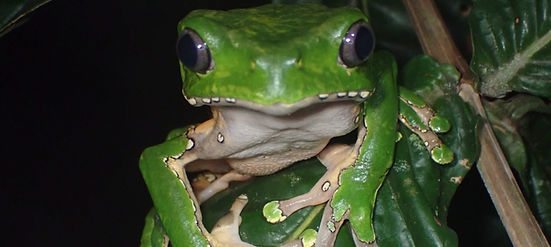
The traditional use of kambô is located in the Amazon region, where the Phyllomedusa bicolor frog is found. The roots of this practice lie in various tribes of the Peruvian, Colombian, and Brazilian Amazon. Each tribe has its own history and mythology regarding the origin of kambô, which typically involves revelations of knowledge received in dreams or in altered states induced by plants.
The traditional application of kambô begins by going into the forest to capture the frog. Once found, it is carefully immobilized by its legs, tied in an X shape. The frog excretes a poisonous mucus through its skin as a defense mechanism against predators. This secretion is stimulated by the stress caused by handling the animal. It is collected with a bamboo branch and left to dry for storage. For indigenous cultures, it is a medicine that works both on the individual's body and on the realm beyond the material, or the "soul." Kambô is considered an entity or "spirit" responsible for the healing process. In this context, the frog is treated with the utmost respect and never harmed, since, according to Amazonian beliefs, harming the animal would anger its spirit, thus negating its healing abilities. After the extraction process, the animal is returned to the forest.
Indigenous tribes of the Amazon rainforest use kambo for various purposes, such as strengthening themselves, boosting immunity, curing illnesses, and warding off bad luck. It is considered a deep cleansing therapy, both physically, emotionally, and mentally. It has the ability to detoxify the liver and intestines, improve mental function, and dissolve emotional blockages. Furthermore, it helps restore cellular memory.
Traditionally, kambo is also used to ward off enemies, overcome laziness, sadness, physical and mental weakness, low self-esteem, and disharmony with nature. It is believed to attract happiness and good luck and to unblock the heart chakra.
Kambo has numerous potential health benefits, including purification, stress and anxiety relief, pain relief, anticancer properties, addiction treatment, blood pressure regulation, cardiovascular health protection, and antimicrobial properties. However, more research is needed to fully understand the effects and mechanisms of kambo.
